
🌷 The Garden Journal · Color Guide
Pink
Tulips
Meaning · Varieties · Growing · Beauty
🌷 The Garden Journal · Color Guide
Meaning · Varieties · Growing · Beauty
Of all the tulip colours, pink is perhaps the most universally appealing. There's something about the range — from the softest blush to deep, vivid cerise — that speaks to almost everyone. Pink tulips don't demand attention the way red does, nor do they retreat into the gentle background of white. They occupy a beautiful, expressive middle ground.
They are the tulips you reach for when you want to say something warm and genuine without the weight of grand romantic declaration. A gift of pink tulips says: I care about you. I'm thinking of you. You matter.
In this guide we explore pink tulips in full — their meaning and symbolism, the best varieties, growing tips, gifting occasions, and of course their extraordinary beauty through the full range of pink shades that nature produces.
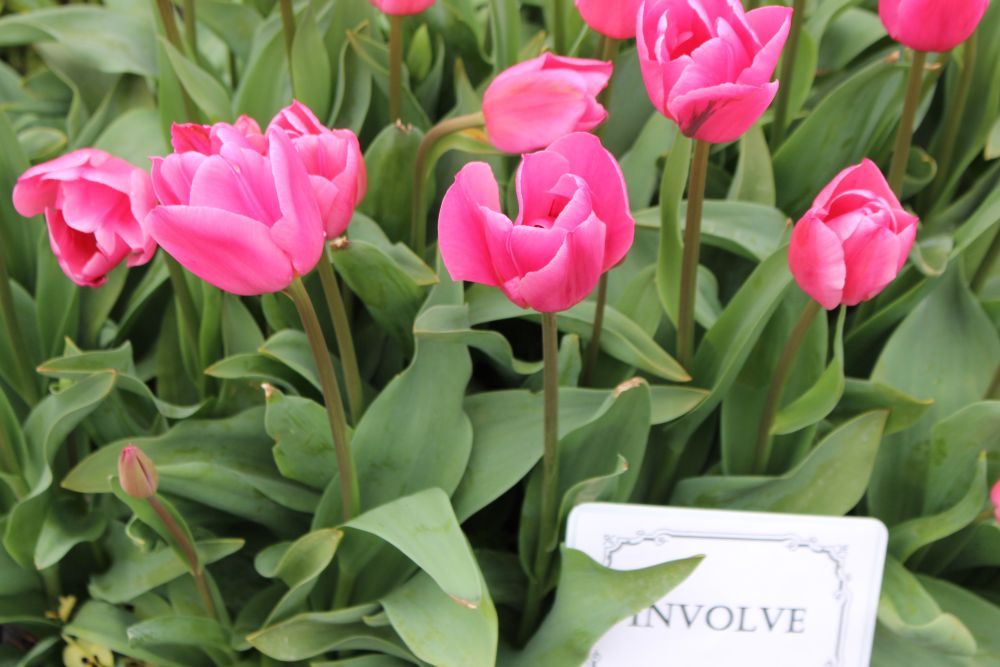
Pink tulips have carried a consistent symbolic meaning across cultures and centuries — one that centres on the tender, everyday expressions of human affection that matter most in life.
Pink tulips sit in an important emotional space in the language of flowers. Where red declares deep romantic love and white offers forgiveness or sympathy, pink expresses something that runs through everyday relationships — the affection for a close friend, the appreciation of a colleague, the love of a parent for a child or a child for their mother. It is perhaps the most human of all the tulip colours.

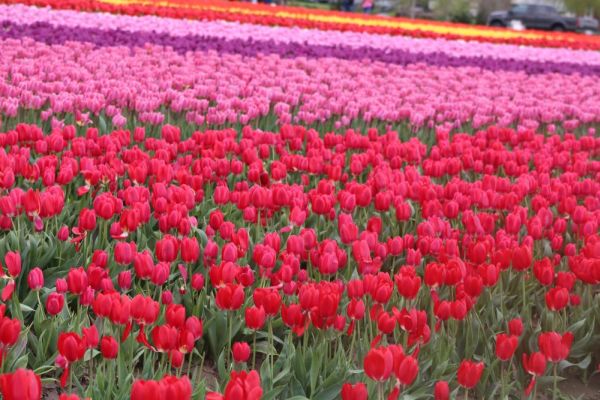
The extraordinary range of pink — from the softest blush to deep cerise — each shade carrying its own emotional register.
Pink is not a single colour — it is a whole world of hue and feeling. The range available in tulip varieties is remarkable, and different shades carry subtly different meanings and moods.


Three shades from the pink tulip spectrum — blush, mid-rose, and deep cerise — each beautiful in its own way.
Pink tulips are among the most versatile flowers you can give — welcome at almost any occasion that calls for warmth, celebration, or appreciation. Their adaptability is part of what makes them so enduringly popular.

Pink tulips make one of the most thoughtful and versatile floral gifts — fitting any occasion that calls for warmth and care.
With dozens of outstanding pink cultivars to choose from, these are the varieties that consistently impress — whether for their vigour, their colour intensity, or the sheer beauty of their blooms.
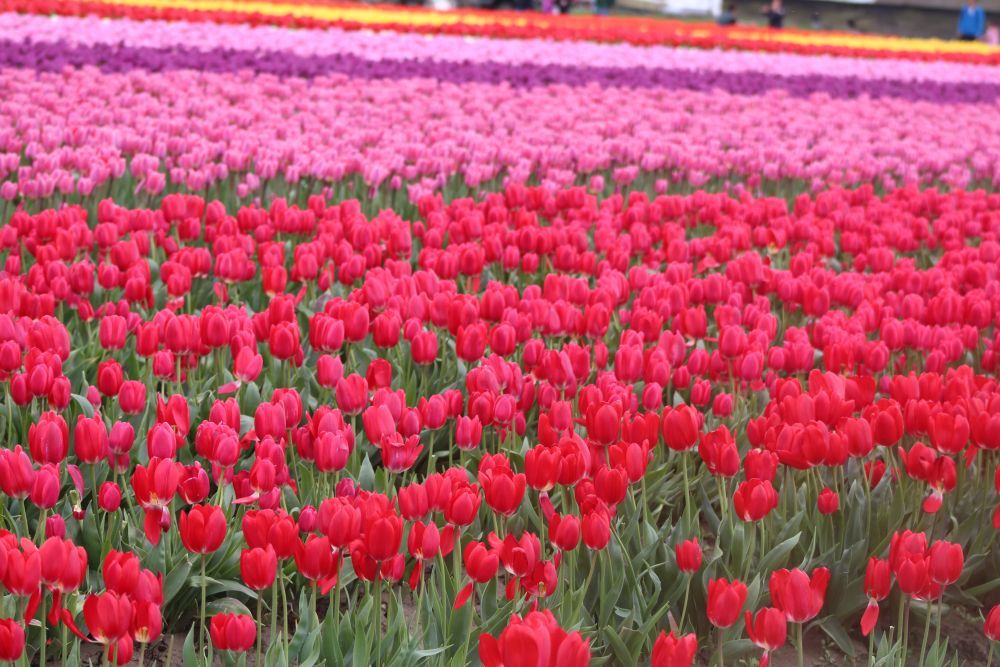
Pink tulips are no more demanding than any other colour — the fundamentals of successful tulip growing apply equally to all shades. A few key points specific to getting the best colour saturation and bloom size from pink varieties are worth knowing.
September–November, when soil temperature drops to 50–55°F (10–13°C). Cold dormancy is essential for spring bloom.
Pink varieties develop their richest colour saturation in full sun (6+ hours daily). Shade produces paler, weaker blooms.
Proper depth produces the strong stems pink varieties need to hold up their often full, heavy blooms.
Pink tulip bulbs are particularly susceptible to rot in wet soil. Excellent drainage is non-negotiable.
After blooming, leave all foliage intact until fully yellow. This stores energy for next year's blooms — especially important for peony-style doubles.
For reliable reblooming pink tulips, Pink Impression (Darwin Hybrid) is the outstanding perennial choice — returning strongly for 5+ years.
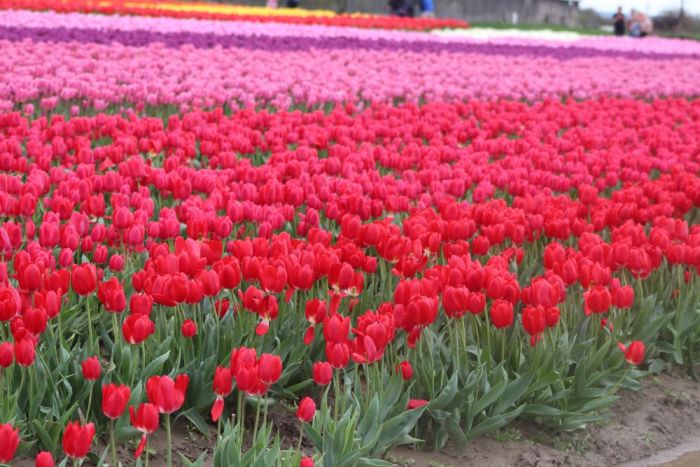

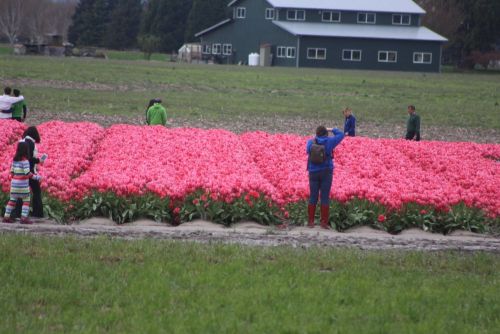
Pink tulips at every stage — from tightly closed bud to fully open bloom in the garden.
Pink tulips are wonderfully versatile in mixed plantings and bouquets. Their warmth complements a wide range of colours — here are the pairings that work best.
A classic pairing — the softness of white amplifies pink's warmth. Clean, elegant, and timeless.
Passionate and lush — deep pink paired with red creates a rich, romantic display full of warmth.
Joy and affection combined — a cheerful spring combination that lifts any border or arrangement.
Sophisticated and unexpected — the contrast between warm pink and cool purple creates visual drama.
A monochromatic planting of different pink shades — blush to cerise — creates stunning depth and elegance.