🌷 The Garden Journal · Color Guide
Purple
Tulips
Royalty · Elegance · Admiration · Prestige
👑
🌷 The Garden Journal · Color Guide
Royalty · Elegance · Admiration · Prestige
👑There is something immediately commanding about a purple tulip. Where other colours invite you in gently — the friendliness of yellow, the softness of pink, the purity of white — purple demands attention. It carries authority. It speaks of something rare and considered.
This is not accidental. Purple has been associated with power, wealth, and distinction for more than two thousand years — not as fashion or trend, but because purple dye was genuinely one of the most expensive substances in the ancient world. Emperors wore it. Bishops reserved it. Common people were sometimes forbidden from it. That legacy runs deep, and purple tulips carry every shade of it.
Today, purple tulips bring that same quality of distinction into the garden and into the home — announcing that whoever planted or received them has excellent taste, and knows it.
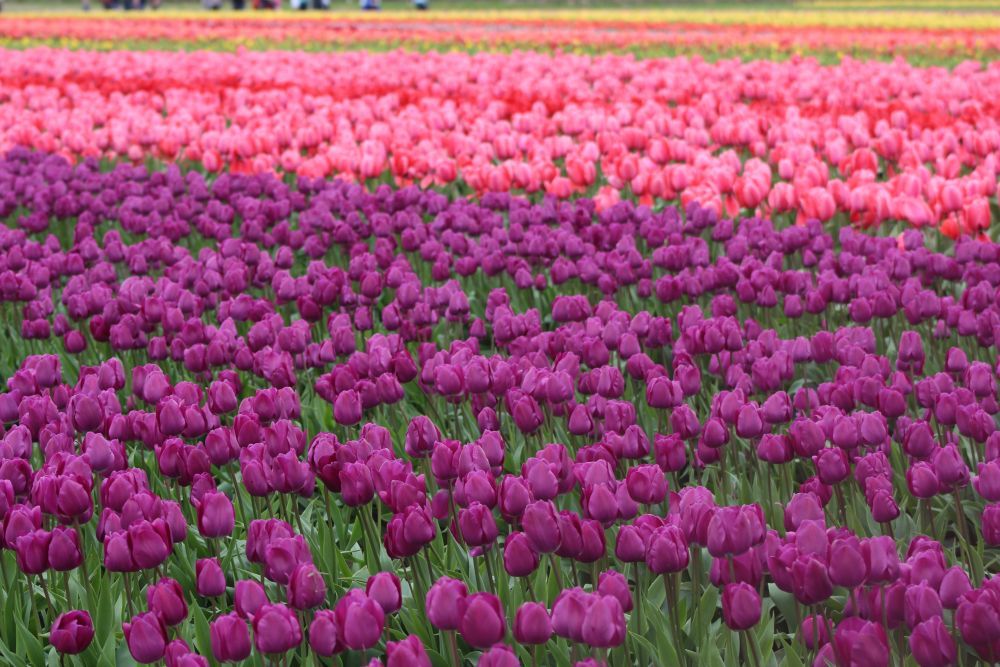
No flower colour carries richer symbolic history than purple. In the tulip world, purple blooms concentrate all of that history into an elegant, accessible form — one that speaks volumes without a single word.
Tyrian purple — extracted from sea snails off the Phoenician coast — was worth more than gold by weight in the ancient world. A single pound required over 250,000 molluscs to produce. Only the wealthiest rulers could afford it. Purple tulips carry that entire history in their petals.
In the Ottoman Empire, where tulips first became cultivated flowers of significance, purple varieties were among the most prized of all — a fitting colour for a culture that built perhaps the greatest floral tradition in history. Today that meaning has broadened but its essence remains: purple tulips are flowers for occasions and people of distinction.
Purple is itself a vast world of colour, from the palest silver-lilac to the darkest near-black violet. Tulip breeders have explored almost every shade in between, producing a range of purple varieties unlike any other flower.

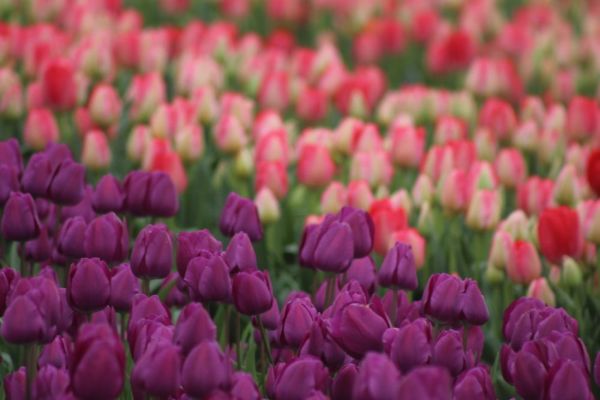
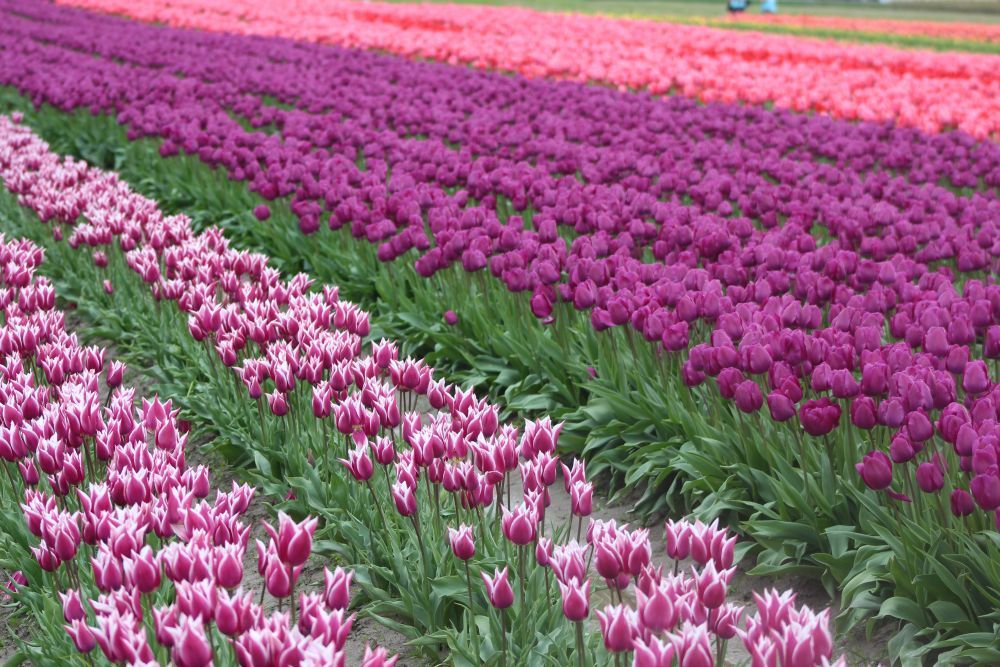
From soft violet to deep, velvety purple — the depth of colour in purple tulip varieties is extraordinary.
Purple tulips are the choice for occasions that call for genuine distinction — moments when you want to convey deep respect, admiration, or the acknowledgement of someone exceptional. They are not casual flowers; they mean something.
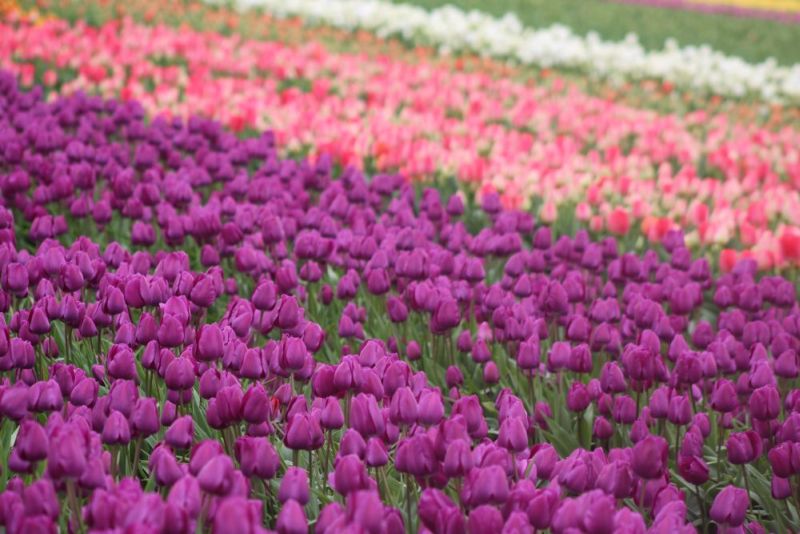
Purple tulips in a formal setting — their commanding presence elevates any space instantly.
From soft lavender to near-black 'Queen of Night', the purple tulip range spans a wider spectrum of shade and form than almost any other colour. These are the standout varieties.

Purple tulips follow the same essential growing principles as all tulips — but a few specifics are worth knowing to get the deepest, most saturated colour and the strongest repeat performance year after year.
September–November when soil cools to 50–55°F (10–13°C). Cold dormancy triggers the bloom cycle — without it, purple tulips will not flower properly.
Purple varieties develop their richest, most jewel-like colour in full sun. Shade produces paler, less vibrant blooms and weaker stems.
Proper depth supports the tall, elegant stems that many purple varieties produce — especially the statuesque late-season types like Queen of Night and Havran.
Purple tulip bulbs are susceptible to fungal rot in wet soil. Sandy loam or amended soil with added grit gives the best results.
Particularly important for dark-flowered types like Queen of Night — these heavy bloomers need maximum energy stored in the bulb to return strongly the following year.
For reliable return: Negrita and Purple Flag (Darwin Hybrid performance) are most consistent. Queen of Night is spectacular but may need refreshing after 2–3 years.


Purple tulips at different stages and in different lights — each moment is its own kind of beauty.
Purple is one of the most rewarding tulip colours for mixed planting — its contrast with other shades is dramatic and always intentional-looking. These are the pairings that work most powerfully.
The most classic and elegant combination — cool purple against pure white creates a sophisticated, high-contrast display with a formal quality.
Complementary colours that create maximum visual impact — the warm brightness of yellow makes purple appear even richer and more intense.
Warm and cool tones that harmonize beautifully — this pairing is lush, romantic, and works especially well in cottage garden-style planting.
A monochromatic purple planting — Queen of Night through Negrita to Blue Diamond — creates extraordinary, almost painterly depth.
Rich, dramatic, and deeply passionate — this combination has a jewel-like intensity that is breathtaking in mass plantings.