
🌷 The Garden Journal · Color Guide
Yellow
Tulips
Happiness · Sunshine · Friendship · Joy
☀️
🌷 The Garden Journal · Color Guide
Happiness · Sunshine · Friendship · Joy
☀️There is no flower colour quite as immediately, unreservedly joyful as yellow. A vase of yellow tulips transforms any room — their luminous, saturated colour carries what feels like concentrated sunshine, even on the greyest of days.
Yellow tulips have been growing in gardens for centuries, but it is their contemporary meaning that makes them so enduringly popular as gifts. They carry no ambiguity, no weight, no complicated symbolism to navigate. They simply say: I want you to feel happy. I'm thinking of you. The world is better for having you in it.
From the palest primrose to the richest saffron gold, yellow tulips span a spectrum as varied as happiness itself — and this guide explores every shade of it.
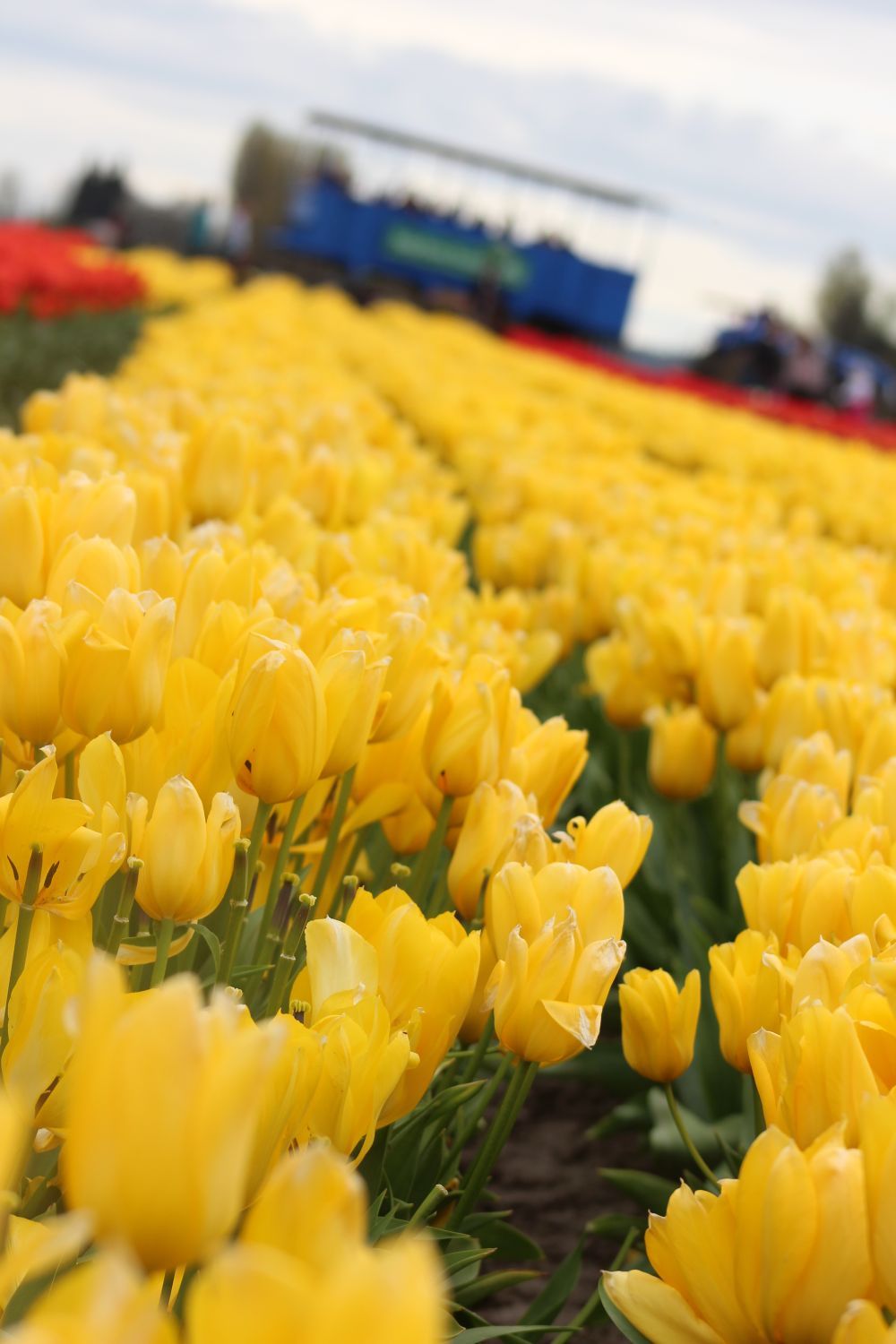
Yellow tulips carry one of the most uplifting symbolic meanings in the floral world — and one that has changed dramatically over time, becoming more positive with each passing generation.
In the Victorian language of flowers, yellow tulips were associated with hopeless love and jealousy — a warning message between lovers. Sending yellow flowers carried a note of caution or heartbreak.
That Victorian association is essentially obsolete. Today, yellow tulips universally represent happiness, friendship, and positivity. They are among the most cheerful and welcome flowers you can give to anyone, for any reason.
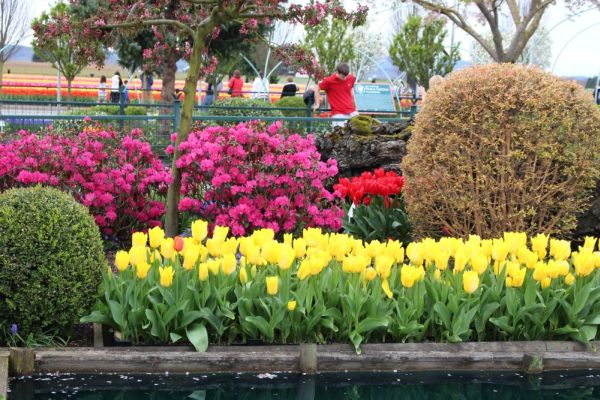

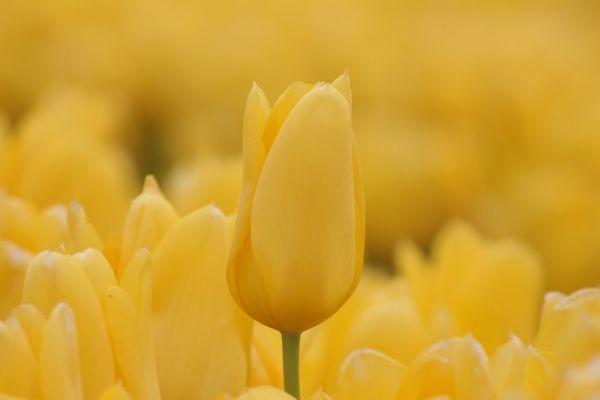
Yellow tulips in their full glory — from the intimate close-up to the sweeping field view, always luminous.
Yellow is one of the most varied colours in the tulip world — ranging from the palest, almost-white primrose to the deepest, richest saffron. Each shade carries its own character and pairs differently in the garden.
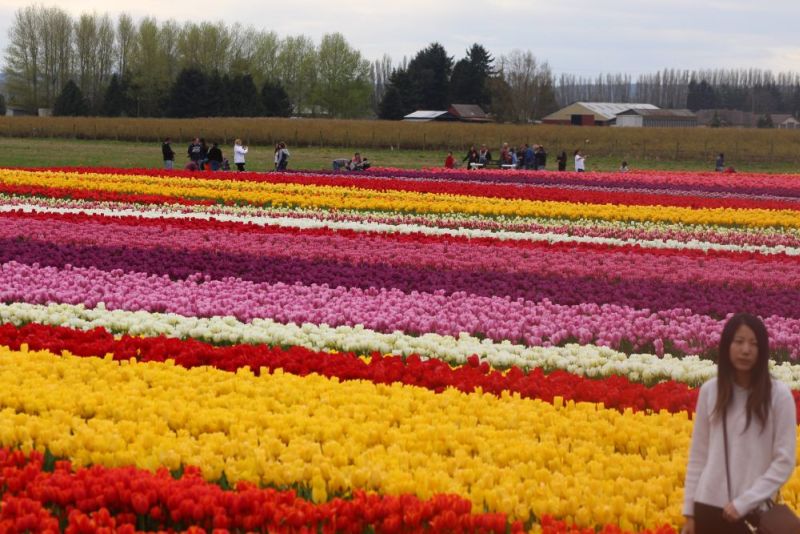
Golden yellow tulips at peak bloom — the colour that most completely captures the spirit of spring.
The connection between yellow flowers and wellbeing is not merely symbolic — colour psychology consistently shows that yellow has measurable positive effects on human mood, energy, and mental clarity. Yellow tulips are nature's most concentrated dose of these effects.
Yellow stimulates mental activity and raises energy levels — explaining why yellow flowers feel so immediately invigorating.
Studies show that bright flowers in living and working spaces measurably reduce cortisol levels and feelings of anxiety.
Yellow is strongly associated with openness, sociability, and connection — yellow tulips genuinely warm the atmosphere of a room.
This is why yellow tulips are the classic get-well gift, the natural choice for lifting someone's spirits on a difficult day, and the flower most often chosen to brighten a workspace or home during winter months.
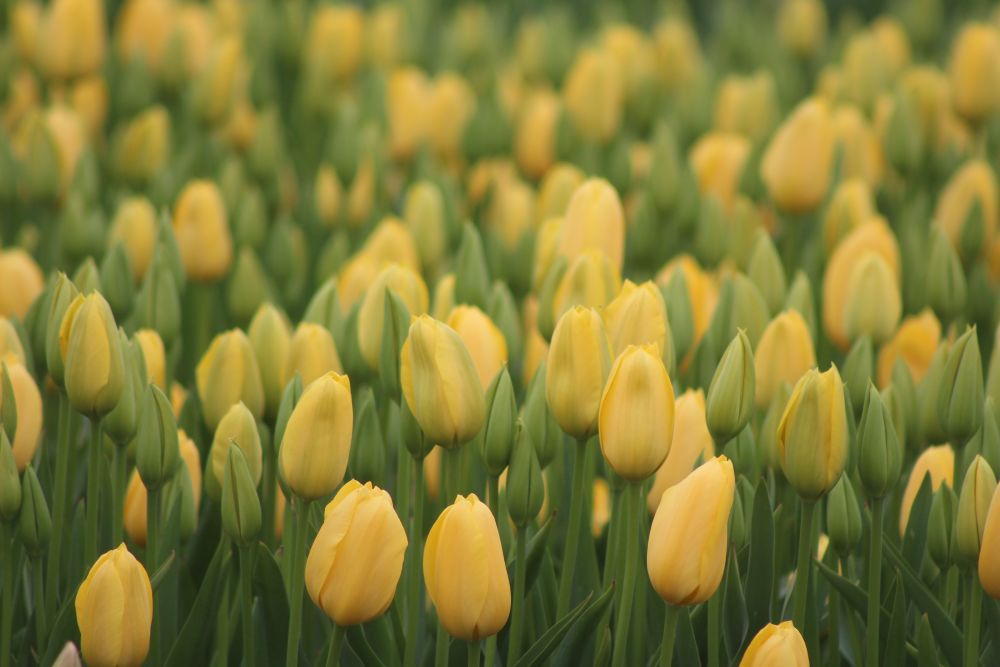
Yellow tulips are the most versatile gifting flower — welcomed at almost any occasion and by almost anyone. Their message of warmth and happiness is universally appropriate.


Yellow tulips — in borders, in bouquets, in any setting — always the most immediately uplifting flower in the arrangement.
Yellow is one of the most richly developed colours in tulip breeding — with exceptional varieties across every group, from the purest butter-yellow to rich amber-gold.
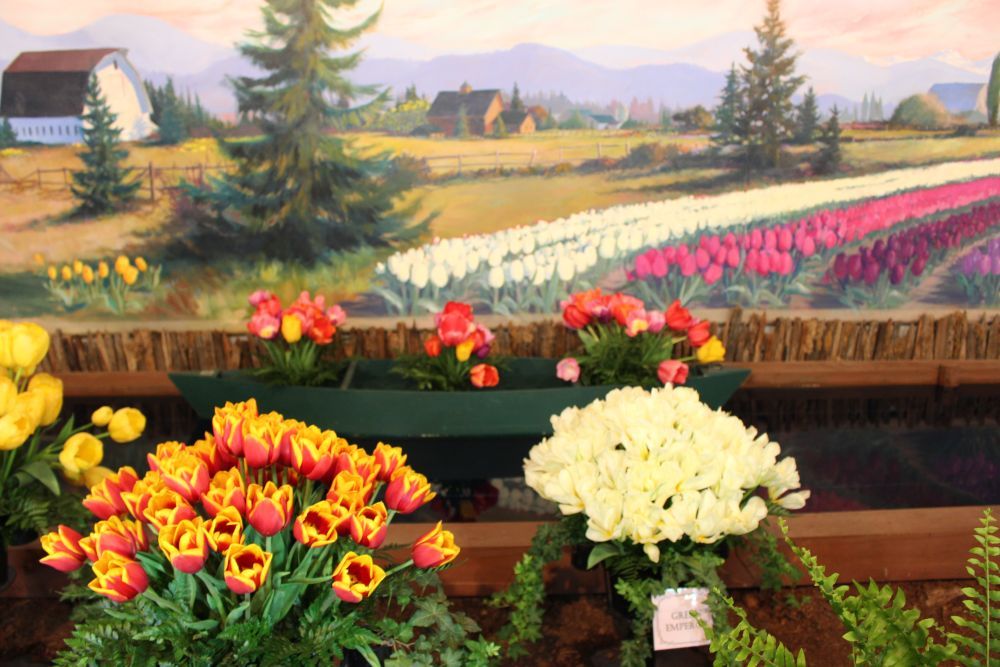
Yellow tulips are no more demanding than any other colour, but a few specific points help produce the richest, most saturated yellow blooms and the most reliable return year after year.
September–November, when soil drops to 50–55°F. Yellow Darwin Hybrids need the full cold dormancy period to develop their characteristic richness of colour.
Yellow varieties are particularly responsive to sunlight — full sun (6+ hours) produces the most vivid, saturated colour. Shade noticeably dulls yellow to a pale, washed-out tone.
Proper depth ensures strong stem development — particularly important for tall Darwin Hybrid yellows like Golden Parade that can reach 24+ inches in height.
Wet summer soil causes bulb rot — yellows are no exception. Sandy loam or well-amended soil is ideal. Avoid low-lying areas where water collects after rain.
Allow all foliage to die back naturally before removal — typically 6–8 weeks after bloom. This is essential for Golden Parade and Strong Gold to return with full vigour.
Golden Parade (Darwin Hybrid) is the outstanding perennial choice — returning strongly in cold climates for 5+ years. West Point (lily-flowered) also has good perennial performance.
Yellow is one of the most versatile colours in the spring garden — its warmth and brightness works with almost every other colour, though some pairings are particularly striking.
The most striking complementary pairing — warm yellow against cool purple creates maximum visual impact. The classic tulip field combination that looks spectacular in any scale.
Bold, energetic, and deeply joyful — this warm pairing fills borders with vibrant, celebratory energy. The combination most associated with Dutch tulip fields in spring.
Fresh, clean, and luminous — white amplifies yellow's brightness without competing. A crisp spring combination that works beautifully in formal and informal settings alike.
Warm, joyful, and abundantly spring-like — yellow and pink together evoke the unrestrained happiness of the season at its peak. Perfect for cottage and informal gardens.
A monochromatic yellow scheme — primrose through golden to saffron-amber — creates extraordinary warmth and depth. Sophisticated, unexpected, and beautiful.